BELFRY › Bell guides › The Canonical Hours
The Canonical Hours
The canonical hours are the fixed times of prayer that divide a monastery's day: Matins, Lauds, Prime, Terce, Sext, None, Vespers and Compline. For fifteen centuries a bell has called monks and nuns to each one — the origin of the bell tower ringing through the day.
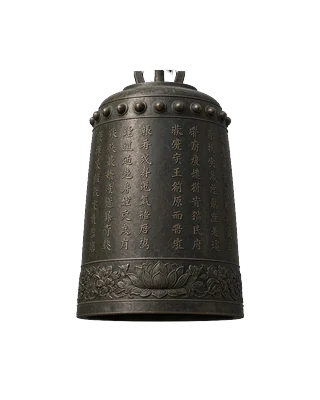
Three slow tolls on a deep bourdon, the way a monastery calls the community to prayer.
The eight hours, with their times
The times were tied to the sun rather than the clock, so they move with the seasons. These are the usual approximate times:
| Hour | Roughly when | Meaning |
|---|---|---|
| Matins | In the night, or before dawn | The night office, also called Vigils |
| Lauds | Dawn | "Praises" — morning prayer at first light |
| Prime | About 6 am | The "first" hour of the day |
| Terce | About 9 am | The "third" hour |
| Sext | Noon | The "sixth" hour |
| None | About 3 pm | The "ninth" hour (said none, rhymes with bone) |
| Vespers | Evening, around sunset | Evening prayer — Evensong in the Anglican church |
| Compline | Before sleep, about 9 pm | "Completion" — the last prayer of the day |
The names Prime, Terce, Sext and None come from the Roman way of counting the hours of daylight from sunrise: the first, third, sixth and ninth hours.
Where the hours come from
The pattern goes back to the Psalms: "Seven times a day do I praise thee" and "At midnight I will rise to give thanks unto thee" (Psalm 119). Seven day hours plus the night office gives the eight. Around the year 530, the Rule of St Benedict set out the hours in detail, and Benedictine monasteries spread them across Europe.
Because a monastery needed everyone in choir at the same moment, each hour was announced by a bell. Town and parish bells followed the same rhythm, which is why so many church bells still ring at dawn, noon and dusk.
The canonical hours today
The prayers are now known as the Liturgy of the Hours or the Divine Office. After the Second Vatican Council (1963) the Roman Catholic Church dropped Prime and reshaped Matins as the Office of Readings, but many monasteries still keep the full round. Anglicans pray Morning Prayer and Evensong, and Compline has become popular again as a quiet sung service late in the evening.
Questions people ask
What are the canonical hours?
The eight fixed times of daily prayer in the Christian monastic tradition: Matins, Lauds, Prime, Terce, Sext, None, Vespers and Compline.
What time is Compline?
Compline is the last prayer of the day, said before sleep, usually around 9 pm.
What time is Vespers?
Vespers is evening prayer, said around sunset, often about 6 pm.
Why are they called Prime, Terce, Sext and None?
They are the first, third, sixth and ninth hours of the day, counted from sunrise the Roman way — roughly 6 am, 9 am, noon and 3 pm.
Who set the canonical hours?
They grew from early Christian practice based on the Psalms, and were set out in detail by the Rule of St Benedict around 530.
Is there an app that rings the canonical hours?
Yes. The free version of the BELFRY app rings the eight canonical hours, Matins to Compline, at the traditional times in your own time zone.
Hear it on your iPhone
BELFRY is a bell tower in your pocket: twenty real bell voices, the hours struck the way a church clock strikes them, prayer bells and meditation bells, ringing even with your phone locked. Free to download, no ads, ever.